

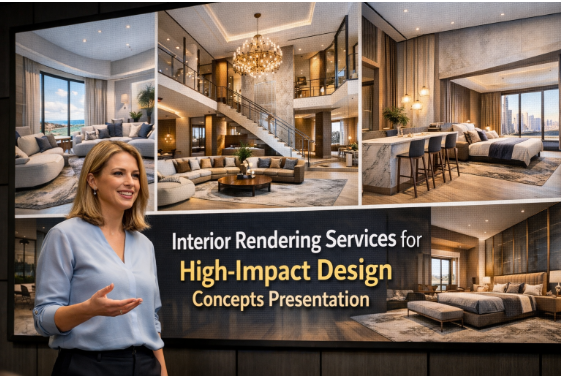
One of the biggest challenges with architectural and interior design projects is to effectively present the interior design concepts. Layouts, material boards, and drawings do explain what is planned, but they often fall short in communicating how the space will actually feel.
It is at this juncture, in the gap between concept and perception, that interior rendering services come into crucial play in transforming abstract ideas into high-impact, powerful visual experiences.
Why High-Impact Interior Presentation Matters
Interior spaces are inherently emotional. The client is not just judging dimensions and materials but reacting to mood and comfort, flow, and atmosphere. Even the best idea, when the design concept doesn’t find a visual resonance, may be misunderstood or rejected.
High-impact presentation helps:
- Convey design vision in an instant
- Connect with the space on an emotional level.
- Reduce uncertainty during decision-making
- Align expectations before the execution begins.
This is particularly important in residential, hospitality, commercial, and real estate projects because the interior quality conveys value perception directly.
From Abstract Ideas to Visual Clarity
Traditional presentation methods include plans, elevations, mood boards, and material samples. This is helpful, but it does call for imagination and some technical understanding.
Interior rendering services bring all these components together into one cohesive visual by showing:
- Realistic room proportions with spatial depth
- Furniture scale and placement
- Textures, finishes, and color harmony of materials
- Natural and artificial lighting behaviour
Creating High-Impact Visual Storytelling
A good interior render is much more than a showcase of a room, since it depicts a story. Interior visualization through composition, lighting, and perspective gives insight into how a space should be experienced.
High-impact interior renderings will focus on:
- Strategic camera angles emphasize the design intent.
- Lighting for Mood and Function
- Realistic details that make the spaces feel lived-in.
- Visual flow guides the viewer through the space.
Boosting Client Confidence and Approvals
One of the most common causes of project delay is client hesitation. Many times, it is due to uncertainty, as clients have no idea what the final space will look or even feel like.
With our interior rendering services, clients get:
- A clear preview of the finished interior
- Confidence in selecting materials and furniture
- Assurance that the design meets their expectations
Once the client sees the design visually, approvals happen faster, the feedback is more exact, and revision cycles diminish considerably.
Improving Design Accuracy Before Execution
Interior rendering does not relate only to presentation; it is also a very strong tool for design validation. Often, seeing a space in three dimensions brings out issues that are easily passed over using 2D drawings.
Interior visualization helps in identifying:
- Mismatched Proportions and Scales
- Poor furniture layouts or circulation paths
- Light Imbalance and Shadow Issues
- Conflicting materials or color combinations
By solving these issues digitally, designers increase the level of accuracy, thereby reducing costly changes on site during construction or fit-out.
Supporting Professional Design Presentations
Interior renderings raise the quality of design presentations in many cases:
- Client Design Reviews
- Developer and investor meetings
- Real estate sales presentations
- Design Competitions & Pitches
A professional 3D architectural rendering company ensures the visuals are not just stunning but also technically accurate and in line with the design intent. The professionalism heightens credibility and strengthens the designer’s hand in very important presentations.
Marketing and Real Estate Showcasing: Strengthening
Interior renders are one of the most important marketing tools in real estate, hospitality, and commercial interiors, especially prior to space construction.
High-impact interior visuals are in wide usage for:
- Brochures and websites
- Sales Galleries and Showrooms
- Digital advertisements and social media
- Leasings and investor presentations
Realistic interior visuals truly place the prospect in the space, and significantly heighten engagement and conversion.
Aligning Stakeholders with a Common Visual Language
These interior projects engage several stakeholders: clients, designers, consultants, contractors, and marketers. Incomplete coordination among them leads to errors and delays.
The interior renders are a common reference that:
- Aligns everyone on the same design vision.
- Improves communication during reviews
- Reduces interpretation errors during execution
This mutual understanding boosts collaboration and project efficiency right from conception to completion.
Long-term Value of Interior Renderings
The interior visuals created for concept presentations often continue to provide value long after the initial approvals have been gained.
They can be reused for:
- Ongoing marketing campaigns
- Portfolio showcases
- Case studies and award submissions
- Future projects that have a similar design language
This makes interior rendering a long-term asset, not just a one-time presentation cost.
Why Professional Expertise Makes a Difference
Not every interior render makes an impact. Results depend heavily on experience, comprehension of design, and attention to detail.
A skilled 3D architectural rendering company brings:
- Knowledge of principles of interior design
- Realistic lighting and material simulation
- Correct interpretation of drawings
- Structured workflows and revision handling
This expertise ensures that the visualizations are inspiring yet reliable and underpin, rather than complicate, design decisions.
Meeting Modern Client Expectations
Today’s client requires clarity before making design decisions. High-impact visuals are not a luxury but rather an expectation.
Projects depending on just drawings and samples are generally plagued by longer approval cycles and a greater risk of dissatisfaction.
Conclusion
With enhanced design accuracy, acceleration of client approvals, and professional presentations, interior rendering has become an essential tool in modern interior design workflows. If delivered by an experienced visualization partner, these visuals will do so much more than present ideas: they will make sure those ideas are understood, approved, and executed precisely as intended.