

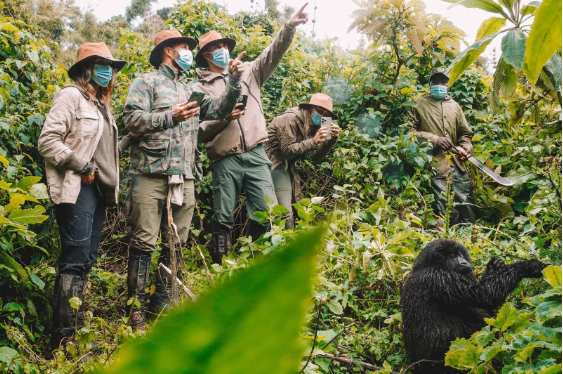
Few wildlife encounters compare to sitting a few metres from a mountain gorilla. The silverback’s calm authority, an infant tumbling through the undergrowth and the sound of branches being stripped for lunch stay with people for years. It is also a very short experience. Most permits allow one hour with the family, and many travellers say the hour ends far too soon.
Double gorilla trekking is the answer. You track gorillas on two separate days in one trip, either in two sectors of the same park, in two different parks, or across two countries, usually Uganda and Rwanda. This guide covers what it involves, what it costs, how to plan it and who it suits.
What Is Double Gorilla Trekking?
Double gorilla trekking means holding two gorilla permits within one itinerary and trekking a different habituated family on each day. Most travellers choose one of three formats.
- Two treks in Bwindi Impenetrable National Park, Uganda. Bwindi has several tracking sectors: Buhoma, Ruhija, Rushaga and Nkuringo. Trekking in two of them lets you meet two families, and the forest changes noticeably between sectors.
- Bwindi plus Mgahinga Gorilla National Park, Uganda. Mgahinga sits in the Virunga range and is far smaller than Bwindi. Combining the two gives you two different landscapes, dense ancient rainforest and volcanic slopes with bamboo and montane vegetation.
- Uganda plus Rwanda. This is the most popular cross-border option. You track in Bwindi or Mgahinga, cross the border and track again in Volcanoes National Park. It lets you compare the two countries’ tracking styles, lodges and cultures in a single trip.
All three formats share the same idea: two encounters, two families and two days of different terrain.
Why Travellers Choose to Trek Twice
You get a second chance at the experience. Gorilla trekking is partly unpredictable. Your first family might be resting and quiet, while your second might be playful and active. Two treks improve your odds of seeing a wider range of natural behaviour, such as feeding, grooming, play and social interaction.
Every family is different. Each group has its own size, personalities and dynamics. Some have a dominant silverback with a large following, and others are small and cohesive. Meeting two groups gives you a real sense of how varied gorilla society is.
Photographers benefit. Light under the forest canopy is challenging. A second day lets you apply what you learned, adjusting settings, positioning and patience for far better images.
It uses your travel investment well. Reaching the gorilla highlands takes time and money. Adding a second trek costs a permit and a day, not an entire second trip.
You support conservation twice over. Permit revenue funds anti-poaching patrols, veterinary care, community projects and habitat protection. Mountain gorillas are among the few great apes whose numbers have grown in recent decades, and the permit system is a large part of why.
Permit Costs: What to Budget
Permits are the biggest fixed cost, so understanding them matters. Prices below are for foreign non-resident visitors.
- Uganda: $800 per person in high season, or $600 during the discounted low-season months of April, May and November.
- Rwanda: $1,500 per person, set by the Rwanda Development Board, with the price reported as steady for 2026/2027.
- Uganda gorilla habituation experience: from $1,500, with four hours with the gorillas instead of one.
For a double trek, the combinations work out roughly as follows:
| Format | Approximate permit cost per person |
| Two treks in Uganda (high season) | $1,600 |
| Two treks in Uganda (low season) | $1,200 |
| One trek in Uganda + one in Rwanda | $2,300 |
Pricing is a moving target. One 2026 guide advises that travellers should check the tariff that applies to their actual trekking date rather than relying on older guides. The Uganda tariff in several sources is described as running through June 2026, so confirm the current Uganda Wildlife Authority schedule before budgeting. Permit prices are only part of the picture. Lodging, transfers, meals, guides and tips all add up, and one comparison suggests that a seven-day Uganda gorilla safari typically costs $2,200 to $3,500 per person, while a Rwanda equivalent runs $3,500 to $5,500. Treat these as indicative ranges and ask your operator for a written, itemised quote.
How a Double Trek Typically Works
A well-planned itinerary leaves breathing room between treks. Here is a sample five-to-six-day outline for a Uganda double trek:
- Day 1: Arrive in Entebbe or Kigali and transfer toward the Bwindi region, or take a domestic flight to a nearby airstrip to save a long road journey.
- Day 2: First trek in your first sector. Briefing at 7:30–8:00 am, then tracking for anywhere from 30 minutes to several hours depending on where the family spent the night.
- Day 3: Transfer to a second sector, rest and enjoy the lodge.
- Day 4: Second trek with a different family.
- Day 5 onward: Optional extras such as a community walk, a Batwa cultural experience, or the journey to Rwanda or onward to another park.
Back-to-back trekking days are possible, but most operators suggest at least a rest day if you can spare it. The terrain is steep, humid and often muddy, and legs tend to feel the first day by the second morning.
Choosing Between Uganda and Rwanda, or Combining Them
Both countries offer excellent encounters. The differences are mostly practical.
Uganda has more gorilla families and more sectors, a lower permit price and a wider choice of accommodation, from basic to ultra-luxury. Bwindi’s terrain can be demanding, but the biodiversity is extraordinary, and the country adds chimpanzee tracking, savannah safaris and lake scenery.
Rwanda offers convenience. Volcanoes National Park is about three hours’ drive from Kigali, so a short trip is realistic. Infrastructure is polished and the park is compact, though it carries a much higher permit cost.
A combined trip lets you experience both. Many itineraries cross at the Cyanika or Katuna border posts, and some operators arrange private transfers with border formalities handled in advance. If time is limited, place your most demanding trek earlier in the itinerary when you are freshest.
When to Go
Gorillas can be tracked all year, but conditions vary.
- Dry seasons (roughly June to September and December to February): Trails are firmer, and trekking is generally easier. These are peak months, and permits sell out early.
- Wet seasons (roughly March to May and October to November): Trails are muddier and more slippery, but forests are lush, crowds are thinner and Uganda offers discounted permits in some low-season months.
If you plan a double trek in peak season, book permits as far ahead as possible. Several months is typical, and earlier still for specific sectors or dates.
Preparing Physically and Practically
Fitness. You do not need to be an athlete, but you do need reasonable stamina. Walks of two to six hours on steep, uneven ground at altitude are common. Practice with hill walking and stair training in the weeks before.
What to pack.
- Sturdy, broken-in hiking boots with good grip
- Long-sleeved shirt and long trousers in muted colours
- Lightweight waterproof jacket
- Gardening-style gloves to protect your hands from nettles and thorny vegetation
- Gaiters for mud and insects
- Daypack, water bottle and energy snacks
- Camera with a fast lens, plus spare batteries, since flash is not allowed
Porters. Hiring a local porter is inexpensive, helps the community and makes the trek considerably easier. Many travellers consider it essential.
Health. Speak to a travel clinic about vaccinations and malaria prevention. Good travel insurance with medical evacuation cover is strongly advised.
Gorilla Etiquette and Safety Rules
Rangers will brief you before every trek, and the rules protect both you and the animals:
- Groups are limited, typically to eight visitors per family.
- Keep a distance of about seven metres.
- Do not trek if you are ill. Gorillas are vulnerable to human respiratory infections, and a mask may be required.
- Keep voices low and avoid sudden movements.
- Never eat, drink or smoke near the gorillas.
- Do not use flash photography.
- If a gorilla approaches, stay calm, look down and follow your guide’s instruction.
- The minimum age to trek is generally 15.
These measures are part of why mountain gorilla tourism is sustainable. Following them keeps the experience safe for the animals and ensures it continues for future visitors.
Choosing a Reputable Operator
A double trek involves permit allocation, internal transport and often border crossings, so operator quality matters. Look for licensed operators with clear itineraries, transparent pricing and recent traveller reviews. Ask who purchases the permits and whether they are confirmed before you pay in full. Check refund and rescheduling policies, and confirm what is included: transfers, park fees, porters, meals and accommodation. Cheap offers that seem to undercut official permit prices should be treated with caution.
Conclusion
Double gorilla trekking turns a once-in-a-lifetime hour into a richer, more complete journey. Two encounters with two families in two settings give you a deeper understanding of these remarkable animals, better photographic opportunities and a more varied journey through East Africa’s most dramatic landscapes. The investment is real, with permits alone ranging from roughly $1,200 to $2,300 per person depending on your route and season. For many travellers, the return in memories and conservation impact is well worth it. Plan early, prepare physically, verify current permit prices and choose an operator you trust. When you hear branches rustle and a silverback steps into view for the second time, the planning will feel entirely justified.
Key Takeaways
- Double gorilla trekking means tracking two different gorilla families on two separate days, within one park, across two parks or across Uganda and Rwanda.
- Permit prices vary: roughly $800 in Uganda (with discounted low-season months) and $1,500 in Rwanda for foreign non-residents. Always confirm current tariffs.
- Allow at least one rest day between treks where possible, and build in buffer days for travel.
- Book permits several months ahead, especially for peak dry seasons.
- Fitness, proper gear and a porter make a significant difference.
- Follow all health and distance rules, which exist to protect the gorillas.
- Use a licensed operator and request an itemised quote.
Frequently Asked Questions
- Is double gorilla trekking worth it?
For most travellers, yes. A second trek means a different family, different terrain and another chance at memorable behaviour, for the price of one additional permit and a day. - Can I trek on two consecutive days?
Yes, if you are fit. Many operators recommend a rest day between treks, particularly in Bwindi’s steep terrain. - Can I trek the same gorilla family twice?
It is possible, but most travellers prefer to see different families. Your operator can request different families or sectors when booking. - How long do I spend with the gorillas?
Standard permits allow one hour once you reach the family. The Uganda habituation experience offers a longer window of up to four hours at a higher price. - Which is better for a double trek, Uganda or Rwanda?
Uganda offers more families, more variety and lower permit costs. Rwanda offers easier access and a compact park. A combination offers both. - How far ahead should I book?
Several months in advance is sensible, and earlier for peak months or specific Bwindi sectors. - How difficult is the trek?
It ranges from an easy hour to a strenuous half-day, depending on where the gorillas are. Moderate fitness is enough, and porters are available.